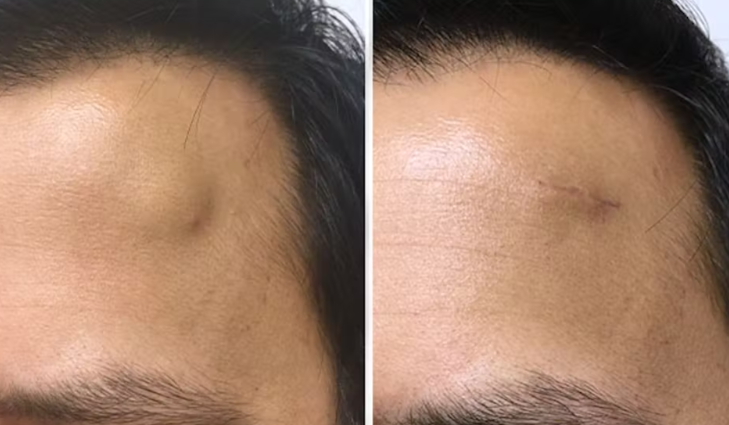
Medical treatment for forehead lump Forehead lumps can be alarming & can cause a lot of concern for those who develop them. They can be caused by a variety of conditions, some benign and others more serious. It is essential to seek medical treatment for any lump on the forehead as early diagnosis and treatment can lead to a better outcome. In this blog, we will discuss the causes, symptoms, diagnosis, and medical treatment options for forehead lumps.
We will also discuss the risks and complications of treatment, recovery, aftercare, and prevention of forehead lumps. By understanding more about forehead lumps and the treatment options available, we hope to empower readers to take control of their health and seek the care they need.
I. Causes of forehead lumps
forehead lumps can be caused by a variety of conditions, both benign and malignant. Some of the most common causes of forehead lumps include:
- Cysts: These are fluid-filled sacs that can develop under the skin. They can be caused by blocked sebaceous glands or hair follicles.
- Lipomas: These are benign tumors made up of fatty tissue. They are usually soft to the touch and moveable under the skin.
- Dermatofibromas: These are small, firm lumps that can appear on the skin. They are benign tumors that are usually caused by a build-up of fibrous tissue.
- Warts: These are caused by the human papillomavirus (HPV) and can appear on the forehead as well as other parts of the body.
- Sebaceous glands: These are small glands that produce oil to keep the skin moisturized. They can become blocked and form lumps on the skin.
- Skin cancer: Lumps on the forehead can also be caused by skin cancer, which includes basal cell carcinoma, squamous cell carcinoma, and melanoma.
It is important to keep in mind that a lump on the forehead can be caused by a variety of conditions, and it is important to have it evaluated by a medical professional to determine the cause and appropriate treatment.
II. Self-examination for forehead lumps
is a simple process that can be done at home. Here are some steps to follow:
- Look in the mirror: Stand in front of a mirror and examine your forehead, paying close attention to any lumps or bumps that you can see.
- Use a bright light: Use a bright light to examine your forehead, as this can help to make any lumps or bumps more visible.
- Use your fingers: Gently feel your forehead with your fingers, running them over the skin to detect any lumps or bumps that may be present.
- Check the surrounding areas: Check the surrounding areas, including your temples, hairline, and scalp, for any lumps or bumps.
- Check for other symptoms: Look out for any other symptoms such as redness, itching, or tenderness around the lump.
- Record any changes: Keep track of any changes in the size, shape, or color of the lump, and note down the date of examination.
- Consult a doctor: If you find any lumps or bumps on your forehead that are new or unusual, it is important to schedule an appointment with a doctor as soon as possible for an accurate diagnosis and appropriate treatment.
III. Symptoms of forehead lumps
Symptoms of forehead lumps can vary depending on the underlying cause. Some of the most common symptoms to look out for include:
- A visible lump on the forehead: The lump may be small or large, and it may be round or irregular in shape.
- Tenderness or pain: Some lumps can be sore to the touch or cause pain.
- Redness or inflammation: The surrounding skin may be red or swollen.
- Changes in skin color: Some lumps may be discolored, with a different color than the surrounding skin.
- Itching or burning sensation: Some lumps can cause an itching or burning sensation on the skin.
- Drainage or bleeding: Some lumps may ooze or bleed if they become infected or ruptured.
- Changes in size or shape: Lumps can change in size or shape over time, growing or shrinking.
It is important to note that not all lumps will have symptoms, and some lumps may not be visible. It’s important to regularly check your skin for any changes and consult a doctor if you notice any new or unusual lumps or bumps on your forehead.
IV. Medical treatment options for forehead lumps
Medical treatment options for forehead lumps will vary depending on the underlying cause of the lump. Some common treatment options include:
- Surgery: Surgery is a common treatment option for forehead lumps. The lump will be removed, and the surrounding tissue will be examined to check for any abnormal cells. Surgery is typically recommended for lumps that are suspicious of cancer or that are causing discomfort or affecting appearance.
- Cryotherapy: Cryotherapy is a treatment option that involves freezing the lump using liquid nitrogen. This can cause the lump to shrink or disappear. It is often used for small benign lumps, such as warts or sebaceous cysts.
- Topical Medications: Topical medications such as creams, gels, or ointments can be applied directly to the lump. It is often used for benign lumps such as warts, sebaceous cysts, and dermatofibromas.
- Radiation therapy: Radiation therapy uses high-energy beams to destroy cancer cells. It is often used in combination with surgery or chemotherapy to treat cancerous lumps.
- Chemotherapy: Chemotherapy is the use of drugs to kill cancer cells. It is often used in combination with surgery or radiation therapy to treat cancerous lumps.
VII. Recovery and aftercare
Recovery and aftercare for forehead lump treatment will depend on the type of treatment received. Here are some general guidelines for recovery and aftercare:
- Surgery: Recovery time after surgery will depend on the size and location of the lump, as well as the type of surgery performed. You may be required to take some time off from work or other activities to allow for proper healing. Your doctor will provide specific instructions for the care of the surgical wound, including how to keep it clean and dry, when to change dressings, and when to return for follow-up appointments.
- Cryotherapy: Recovery from cryotherapy is usually quick, and you may be able to return to your normal activities immediately after the procedure. Your doctor will give you specific instructions on how to care for the treated area, including how to keep it clean and dry and when to return for follow-up appointments.
- Topical Medications: Your doctor will give you specific instructions on how to use the topical medications and when to return for follow-up appointments.
- Radiation therapy: Recovery time after radiation therapy will depend on the length of the treatment course and the overall health of the person. Your doctor will give you instructions on how to care for the treated area and when to return for follow-up appointments.
- Chemotherapy: Recovery time after chemotherapy will depend on the length of the treatment course and the overall health of the person. Your doctor will give you instructions on how to care for yourself during and after treatment, including how to manage side effects, and when to return for follow-up appointments.
VIII.Prevention of forehead lumps
Preventing forehead lumps can be difficult as it depends on the underlying cause of the lump. However, here are some general tips that may help:
- Protect your skin: Wear sunscreen and protective clothing to protect your skin from sun damage, which can increase your risk of skin cancer.
- Avoid picking or squeezing: Picking or squeezing at lumps or bumps on your skin can increase your risk of infection and scarring.
- Practice good hygiene: Keeping your skin clean and dry can help to prevent infection and the development of lumps.
- Maintain a healthy diet: Eating a healthy diet can help to maintain overall health and reduce your risk of certain types of lumps, such as cysts.
- Exercise regularly: Regular physical activity can help to maintain overall health and may reduce your risk of certain types of lumps, such as lipomas.
- Avoid smoking: Smoking can increase your risk of certain types of lumps, such as skin cancer.
- Regular check-ups: Regular self-examinations of your skin can help you identify any new or unusual lumps or bumps early on, and schedule an appointment with a doctor to get it checked.
Conclusion
In conclusion, forehead lumps can have a variety of causes, and the appropriate treatment will depend on the underlying cause of the lump. Surgery, cryotherapy, topical medications, radiation therapy, and chemotherapy are all possible treatment options. However, each treatment option carries certain risks and complications, and it is important to discuss the potential benefits and risks with your doctor before making a decision.
Aftercare and recovery will vary depending on the type of treatment received. Although it is not always possible to prevent forehead lumps, protecting your skin, practicing good hygiene, maintaining a healthy diet, exercising regularly, avoiding smoking, and regular self-examinations and check-ups can help reduce the risk of certain types of lumps. If you notice any new or unusual lumps on your forehead, it is important to schedule an appointment with a doctor as soon as possible for an accurate diagnosis and appropriate treatment.